





Gold Rally or Crash? Investors Face Uncertainty
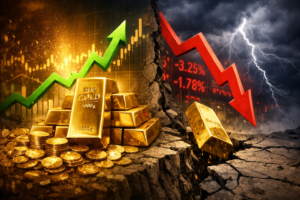
Gold hit record highs in early 2026, then turned volatile. Prices recently dropped due to strong dollar & interest rate outlook.
By Business Elevatus Editorial Team | March 2026
Gold, long regarded as a safe-haven asset, is once again at the center of global investor attention—but this time, the narrative is far from straightforward. After surging to record highs in early 2026, the precious metal has entered a phase of sharp volatility, leaving investors divided over its next major move.
A Strong Start to 2026
The year began with gold prices climbing aggressively, fueled by geopolitical tensions, persistent inflation concerns, and strong central bank demand. Investors flocked to gold as a hedge against economic uncertainty, pushing prices to historic peaks.
Institutional buying, particularly from emerging market central banks, added further momentum. At the same time, retail investors increased allocations to gold-backed ETFs and physical bullion, reinforcing the bullish sentiment.
Sudden Shift: Volatility Takes Over
However, the rally proved fragile. In recent weeks, gold prices have experienced noticeable declines, accompanied by heightened day-to-day volatility. Analysts point to two key drivers behind this shift:
- Strengthening U.S. Dollar: A stronger dollar typically makes gold more expensive for international buyers, dampening demand.
- Interest Rate Outlook: Expectations that major central banks may keep interest rates higher for longer have reduced the appeal of non-yielding assets like gold.
As bond yields rise, investors are increasingly tempted to shift capital away from gold into interest-bearing instruments.
Investor Sentiment: Divided and Cautious
Market sentiment is now sharply divided. Some investors view the recent dip as a buying opportunity, arguing that underlying risks—such as geopolitical instability and long-term inflation—remain unresolved.
Others, however, are adopting a more cautious stance. The possibility of sustained high interest rates and continued dollar strength could limit gold’s upside in the near term.
“Gold is at a crossroads,” said a senior commodities strategist. “We’re seeing conflicting macro signals, and that’s translating into unpredictable price movements.”
Key Factors to Watch
Looking ahead, several factors will determine gold’s trajectory:
- Central Bank Policies: Any shift toward rate cuts could reignite bullish momentum.
- Inflation Trends: Persistent inflation would support gold demand.
- Geopolitical Risks: Escalations in global conflicts could drive safe-haven buying.
- Currency Movements: A weakening dollar could provide a tailwind for prices.
Short-Term Pain, Long-Term Appeal?
Despite current volatility, many experts maintain that gold’s long-term fundamentals remain intact. Its role as a store of value and hedge against systemic risk continues to attract both institutional and retail investors.
Still, the short-term outlook remains uncertain. With macroeconomic forces pulling in different directions, gold may continue to trade in a wide and unpredictable range.
As 2026 unfolds, gold finds itself caught between competing economic forces. Whether the recent pullback marks the beginning of a deeper correction—or simply a pause before another rally—remains to be seen.
For now, investors are left navigating a market defined not by clear trends, but by uncertainty.