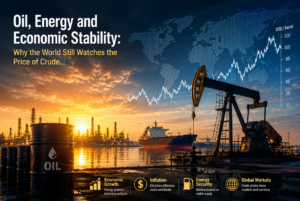
Few economic indicators affect business as immediately as oil.
Despite advances in renewable energy, electrification and sustainability, oil continues to influence transportation, logistics, manufacturing, agriculture, aviation, inflation and global trade at every level.
In 2026, the world has once again been reminded how closely energy and economics remain connected.
Months of uncertainty surrounding the Strait of Hormuz and tensions across the Middle East have kept markets volatile. Since a large share of global oil passes through this region, any disruption has immediate international consequences.
Recently, optimism surrounding diplomatic progress between the United States and Iran helped ease oil prices and calm investor concerns.
Markets responded quickly.
Lower crude prices offered relief to airlines, shipping companies, industrial manufacturers and energy-intensive businesses that have faced rising operational costs over recent years.
Transport became marginally cheaper. Supply chains stabilised. Inflation pressures softened.
But the deeper story is larger than short-term price movement.
Businesses are increasingly aware that energy risk is now strategic risk.
The volatility of global oil markets has accelerated investment in cleaner and more resilient alternatives.
Companies across sectors are investing in:
- renewable energy integration
- electric vehicle infrastructure
- carbon efficiency programmes
- alternative fuels
- decentralised power systems
- sustainable manufacturing processes
What was once viewed as environmental responsibility is now viewed as business resilience.
Energy strategy has become boardroom strategy.
Large corporations are no longer treating sustainability as a public relations initiative. It has become a critical financial and operational decision.
Energy security now sits alongside cybersecurity, financial risk and supply chain resilience on executive agendas worldwide.
The future of business will increasingly belong to companies that can operate effectively in both traditional and next-generation energy systems.